100% Pure Ghee Made Only From Gir Cow Milk
 Every Batch Independently Lab-Tested for Purity
 Free Shipping Available Across India
 Crafted Using the Traditional Bilona Method

Ghee has a reputation for lasting a long time, and that reputation is well earned. But "long shelf life" is not the same as "stored correctly." A jar of excellent ghee kept beside a hot stove, opened with a wet spoon, or left in sunlight can lose its aroma and quality far faster than most people expect.
The core rule is simple: keep desi ghee dry, covered, cool, dark, and free from contamination. Everything else in this guide is really just a variation on that one idea, applied to different containers, seasons, and situations.
Why Ghee Naturally Lasts Longer Than Butter
Ghee lasts longer than butter mainly because of what gets removed during preparation. Butter contains fat, water, and milk solids. When butter (or cultured butter, in the case of bilona ghee) is heated to make ghee, the water evaporates and the milk solids separate out. What remains is almost pure fat, filtered clean.
This low-moisture structure is the main reason ghee is considered shelf-stable. FSSAI standards for ghee include strict moisture limits, and food-science literature generally describes ghee as microbiologically stable precisely because there is very little water available for bacteria or mould to use.
The detail most people miss is that shelf life depends on water activity, not just total moisture. Ghee itself may contain only a trace of water, but a wet spoon, rising steam, or condensation can introduce small pockets of moisture into the jar. Those pockets are enough to invite spoilage, even in a ghee that started out excellent. This is why a premium jar handled carelessly can go off faster than an average one stored well.
What Actually Reduces Freshness
Ghee does not spoil the way milk does. Instead, it loses freshness gradually, through oxidation, moisture contamination, aroma loss, or contact with foreign particles.
| Cause | What it does | Common source in the kitchen |
|---|---|---|
| Moisture | Encourages off-flavours and possible microbial growth | Wet spoon, steam, condensation |
| Oxygen | Causes oxidation and rancid aromas over time | Loose lid, jar left open |
| Heat | Speeds up oxidation and aroma loss | Stove-side storage, sunny counters |
| Light | Accelerates oxidation | Clear jar kept near a window |
| Contamination | Introduces crumbs, spices, water, or microbes | Used spoon, dipping food directly into the jar |
Stove-side storage is a habit worth breaking. A jar kept near the stove is repeatedly exposed to heat, steam from boiling dal or tea, oil and spice particles in the air, and frequent opening. For a Bilona ghee, which carries delicate aroma compounds built up through slow heating of cultured butter, that repeated warmth can dull the aroma well before the ghee is technically spoiled.
Choosing the Right Container
Because ghee is almost entirely fat, it readily absorbs odours and reacts slowly with oxygen and light. The container you use matters more than most people assume.
| Container | Best for | Watch out for |
|---|---|---|
| Glass jar | Home storage, premium ghee | Non-reactive and easy to inspect, but clear glass should be kept away from light |
| Amber or dark glass | Longer-term storage | Protects from light better than clear glass; still needs a tight lid |
| Stainless steel | Daily kitchen use | Durable and opaque, but must be food-grade and completely dry before filling |
| Food-grade plastic | Short-term use or shipping | Can absorb odours over time; avoid near heat |
| Ceramic | Countertop use | Must be food-safe and glazed, with a lid that seals well |
| Tin | Bulk commercial packs | Transfer to a smaller jar once opened; protect from heat and moisture |
For most homes, a glass jar for main storage plus a small stainless-steel or glass jar for daily use works well. Glass is especially suited to a product like Bilona ghee, since it protects the aroma and lets you see the natural graininess and colour rather than masking it.
Where to Store Ghee at Home
The best spot is a cool, dry, dark cabinet, kept away from the stove, sink, window, dishwasher, and kettle.
Good options include a pantry shelf, a closed kitchen cabinet, a dining cabinet, or an upper shelf away from steam. Avoid keeping ghee beside the gas stove, near a sunny window, above a microwave or oven, near the sink, in a drawer with open spice containers, on a hot balcony, or in a cabinet that gets damp during monsoon.
Odour absorption is worth taking seriously. Since ghee is mostly fat, storing it near asafoetida, pickles, detergents, incense, or strong spices can let it slowly pick up unwanted notes, especially if the lid isn't sealing tightly.
Should You Refrigerate Ghee?
For properly made ghee, refrigeration is usually optional rather than necessary, though it helps in specific situations: if your kitchen stays hot for long stretches, if you've bought a large jar you'll use slowly, if the jar has been open for months, if you live somewhere very humid, or if you simply want to preserve aroma for longer.
Room temperature storage works fine if the ghee is properly made and sealed, you use it regularly, your kitchen stays reasonably cool and dry, and you always reach for it with a clean, dry spoon.
The real risk with refrigeration isn't the cold itself, it's condensation. When a cold jar meets warm, humid air, moisture can condense on the surface and find its way in, especially during monsoon. The safest approach is to take out what you need quickly with a dry spoon, close the jar immediately, and return it to the fridge. Keeping a small daily-use portion outside while the main jar stays refrigerated avoids repeated temperature swings altogether.
Storing Ghee Through the Seasons
Indian kitchens shift a lot across the year, and ghee storage should shift with them.
In summer, ghee softens or turns fully liquid, which is completely normal. Keep it away from the stove, use a smaller daily-use jar, store bulk ghee in the coolest cabinet available, and close the lid immediately after each use.
In winter, ghee may turn firm, grainy, or semi-solid, also normal. Avoid repeatedly heating the whole jar just to liquefy it; instead, scoop with a dry spoon and warm only the portion you need.
Monsoon is the trickiest season because of humidity. Avoid leaving a refrigerated jar open for long, never use a damp spoon, keep the jar away from steaming pots, wipe the exterior dry before putting it away, and consider using a smaller daily portion to limit repeated exposure.
Opened vs Unopened Jars
Keep an unopened jar sealed, in its original container, in a cool, dark place. Being unopened doesn't make it immune to heat, so don't store it near the stove just because the seal is intact.
Once opened, a few habits make a real difference:
| Habit | Why it matters |
|---|---|
| Use only a dry spoon | Prevents moisture from entering the jar |
| Close the lid tightly after every use | Limits oxygen exposure and odour absorption |
| Don't dip food directly into the jar | Avoids crumbs and microbial contamination |
| Keep the jar away from steam | Prevents condensation forming inside |
| Transfer a small daily amount to a separate jar | Protects the main jar from repeated opening |
That last habit, keeping a small daily-use container separate from the main jar, does more for freshness than almost any other single change.
Handling Premium Bilona Ghee
Bilona ghee deserves a bit more care than mass-produced ghee, because its value isn't only about fat content, it's the aroma, texture, and process behind it. We cover how that process actually works in What Is Bilona Ghee? Traditional Bilona Method Explained; the short version is that cultured curd is churned into butter and then slow-heated, with aroma developing gradually along the way. Careless storage afterwards can flatten exactly the qualities that process built up.
A few rules worth following: don't store the jar beside the stove or leave it open while cooking, use clean, dry stainless steel or wooden spoons rather than plastic ones that can carry odours, avoid repeatedly melting and cooling the entire jar, keep the main jar sealed and use a smaller serving jar for daily access, and keep it away from strong smells like pickles, detergents, and masalas.
On that last point about melting: ghee naturally melts and solidifies with the weather, and that's fine. What isn't ideal is repeatedly warming the whole jar on the stove or in hot water just for convenience. Warm only the portion you're about to use.
Signs Your Ghee Is Still Fresh
| Sign | What it means |
|---|---|
| Pleasant nutty or dairy aroma | Normal for well-made ghee |
| Golden to pale yellow colour | Normal variation based on feed, season, and heating |
| Grainy or smooth texture | Both are normal, depending on cooling and storage |
| Liquid in summer, firm in winter | Normal response to temperature |
| No visible water droplets | A sign of good storage |
| Clean aftertaste | No sign of rancidity |
Bilona ghee in particular can carry a deeper aroma than standard ghee, a result of cultured butter and slow heating rather than a warning sign.
Signs Your Ghee May Have Spoiled
Ghee is long-lasting, but it isn't indestructible. Watch for a stale, sharp, or paint-like smell (a sign of oxidation), a bitter or soapy taste, visible mould, a wet layer or droplets in the jar, a sour or fermented smell, a burnt smell from overheating, or foreign particles from a dirty spoon.
If ghee smells rancid or shows mould, don't try to fix it by reheating. Reheating can remove some moisture, but it doesn't reliably reverse oxidation or contamination.
Texture and Colour Changes That Aren't Spoilage
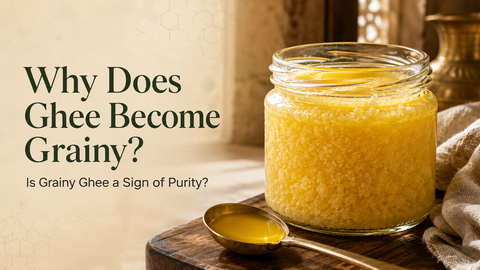
Several changes that look concerning are actually normal. Graininess is usually natural milk-fat crystallization, different fatty acids solidify at different temperatures as ghee cools, and traditional ghee is often appreciated for this texture. It's not a problem as long as the aroma is clean and there's no mould or visible water.
Paler ghee in winter, or when cows eat less green fodder, is also normal. Cow diet and season affect the carotenoids that influence how yellow the ghee looks, and colour alone doesn't indicate a problem if the smell and taste are unaffected. The same goes for ghee turning fully liquid in summer heat.
What isn't normal is a visible watery layer, which suggests moisture has gotten in, or darkening that develops after storage near heat or sunlight and comes with a stale smell.
Storing Ghee in Bulk
Large containers get opened many times, so bulk storage needs its own approach: keep the bulk container sealed until needed, store it in a cool, dry, dark room, transfer only one to two weeks' worth into a daily-use jar at a time, use clean, dry ladles for transfer, never pour unused ghee back into the bulk container, and label the date it was opened.
For restaurants and sweet shops, the same principles apply at a larger scale: use food-grade stainless-steel containers, keep lids closed during service, avoid placing ghee near fryers or tandoors, use dedicated dry ladles, never mix fresh ghee into an older, oxidised batch, and follow a first-in, first-out system. Most bulk ghee loses freshness because of handling, not because the ghee itself was poor to begin with.
Travel and Shipping Tips
Ghee generally travels well, but temperature swings can change its texture, melting in hot weather and firming up or turning grainy in the cold. For shipping or travel, use leak-proof jars, keep them upright, seal the lid tightly, add secondary packaging, and never leave a jar in a hot parked car. Let the jar rest at room temperature after delivery before judging it, texture right out of transit doesn't reflect final quality.
Glass protects quality best for shipping but needs careful cushioning, while food-grade plastic reduces breakage risk but is less ideal for long-term storage.
Storage Mistakes to Avoid
| Mistake | Why it hurts freshness |
|---|---|
| Using a wet spoon | Introduces moisture into the jar |
| Keeping ghee beside the stove | Heat and steam speed up quality loss |
| Leaving the lid open | Lets in oxygen and surrounding odours |
| Dipping food directly into the jar | Adds crumbs and moisture |
| Storing in sunlight | Light accelerates oxidation |
| Repeatedly reheating the whole jar | Dulls aroma and speeds up degradation |
| Mixing old and new ghee | Transfers off-flavours to the fresh batch |
| Refrigerating, then leaving the jar open | Can cause condensation to form |
How Gaurya Farms Thinks About Freshness
Good storage habits protect what good process already built in. Every batch of our A2 Gir Cow Bilona Ghee goes through slow traditional preparation and batch-level lab testing, which you can see for yourself on our Lab Reports page. None of that effort is worth much if the jar then sits open beside a hot stove for months, so we'd rather buyers know exactly how to protect what they're paying for.
Final Takeaway
Desi ghee is naturally shelf-stable, but "shelf-stable" isn't the same as "storage-proof." Keep it dry, sealed, away from heat and light, and handled with clean utensils, and it will hold its aroma and quality for a long time. Most storage problems come down to one of a handful of avoidable habits: a wet spoon, a spot near the stove, or a lid left loose. Fix those, and freshness mostly takes care of itself.