100% Pure Ghee Made Only From Gir Cow Milk
 Every Batch Independently Lab-Tested for Purity
 Free Shipping Available Across India
 Crafted Using the Traditional Bilona Method
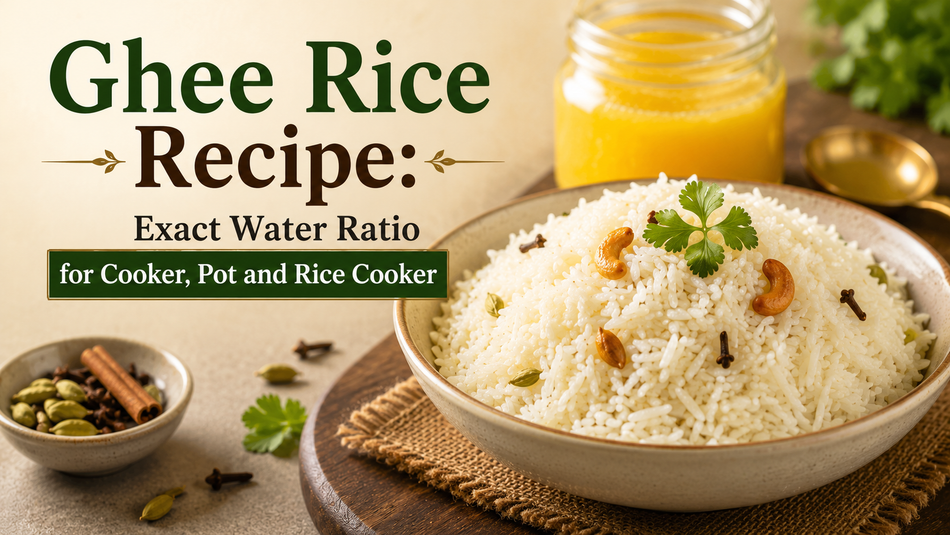
Ghee rice is one of those dishes that looks very simple but can easily go wrong. Too much water can make the rice sticky or mushy. Too little water can leave the grains hard in the centre. Adding too much ghee may make the dish heavy, while using too little may leave it without the rich aroma people expect.
The good news is that you do not need complicated ingredients or a secret cooking method. A reliable ghee rice recipe depends mainly on four things: the right rice, proper washing and soaking, the correct rice-to-water ratio, and a balanced amount of ghee.
This guide explains how to make aromatic, separate and non-sticky ghee rice in a pressure cooker, open pot or rice cooker — with exact measurements you can repeat every time.
Recipe at a Glance
| Detail | Info |
| Preparation Time | 20 minutes |
| Cooking Time | 12–20 minutes |
| Total Time | Around 35 minutes |
| Serves | 2 to 3 people |
| Rice | 1 cup basmati rice |
| Ghee | 1½ tablespoons |
| Water — Pressure Cooker | 1¼ cups |
| Water — Open Pot / Rice Cooker | 1½ cups |
| Difficulty | Easy |
What Makes This Ghee Rice Recipe Useful?
The ingredients used in ghee rice are not unusual. Most traditional versions use basmati rice, ghee, whole spices, onions, cashews and raisins. The important difference is in the measurement and method.
This recipe explains how much water to use for each cooking method, how much ghee to add for one cup of rice, how long to soak basmati rice, how to prevent sticky or broken grains, how to correct common cooking mistakes, and how to make ghee rice without onion.
The aim is not to change an authentic dish only to make it look different. The aim is to make the method clearer and easier to repeat.
Ingredients for Ghee Rice
This recipe serves around two to three people.
- Aged basmati rice — 1 cup, about 200 g
- Gaurya Farms A2 Bilona Gir Cow Ghee — 1½ tablespoons, about 20–22 g
- Water — according to cooking method
- Small onion, thinly sliced — 1
- Cashews — 8–10
- Raisins — 1 tablespoon, optional
- Cinnamon — 1 small piece
- Green cardamom — 2
- Cloves — 3
- Bay leaf — 1
- Cumin seeds or shahi jeera — ½ teaspoon
- Salt — ¾ teaspoon, or to taste
For an onion-free version, simply leave out the onion. The remaining method stays the same.
Which Rice Is Best for Ghee Rice?
Aged basmati rice is usually the easiest choice for ghee rice. Its long grains, mild aroma and lower surface moisture help the cooked rice remain separate. Freshly milled rice can also be used, but it may need slightly less water because newer rice often absorbs water differently.
Check the rice packet before cooking — some brands mention whether the rice is aged. You can also use another long-grain rice, but the water quantity and cooking time may need adjustment.
How to Wash Basmati Rice Properly
Washing removes loose starch from the surface of the grains. That loose starch is one of the main reasons rice becomes sticky.
Place one cup of rice in a bowl and add water. Gently move the grains with your fingers, then drain the cloudy water. Repeat this four or five times. The water does not need to become perfectly clear, but it should look much less cloudy than it did during the first wash.
Avoid rubbing or squeezing the rice aggressively. Basmati grains can break easily, especially after soaking.
Should You Soak Rice Before Making Ghee Rice?
Yes, soaking is useful. It allows the grains to absorb some water before cooking, which helps the rice cook more evenly and can improve grain length.
For this recipe, soak the washed rice for 20 minutes. After soaking, transfer it to a sieve and drain it for at least five minutes. Do not skip draining — water left on the soaked rice becomes part of the cooking water. If the rice is very wet and you still add the full measured amount, the finished dish may become softer than expected.
Ghee Rice Water Ratio
The correct water ratio depends on how you cook the rice.
| Cooking Method | Rice | Water |
| Stovetop pressure cooker | 1 cup | 1¼ cups |
| Open pot | 1 cup | 1½ cups |
| Electric rice cooker | 1 cup | 1½ cups |
These ratios work as practical starting points for soaked and well-drained aged basmati rice. Rice age, brand, soaking time, cooker size and heat level can affect the final texture. If your usual rice becomes too firm, add two tablespoons more water the next time. If it becomes too soft, reduce the water by two tablespoons.
Pressure-Cooker Ghee Rice Recipe
This is the fastest method and works well for everyday family meals.
Water Ratio
Use: 1 cup soaked basmati rice + 1¼ cups water
Method
Wash the basmati rice four or five times. Soak it for 20 minutes and drain it for at least five minutes.
Place a 2- or 3-litre pressure cooker over low-medium heat. Add 1½ tablespoons of ghee. Once the ghee becomes warm, add the cashews. Fry them until lightly golden, then remove them and keep them aside. Add the raisins and fry for a few seconds until they puff. Remove them as well.
Add the cinnamon, cardamom, cloves, bay leaf and cumin seeds. Allow the spices to cook for 15–20 seconds — do not let them burn. Add the sliced onion and cook until it becomes light golden. Dark-brown onion can overpower the mild aroma of the rice and ghee.
Add the soaked and drained rice. Gently sauté the rice for one to two minutes, using a light hand so the grains do not break. Add 1¼ cups of water and ¾ teaspoon salt. Mix only once.
Close the cooker and cook on medium heat until one whistle. Turn off the heat and allow the pressure to release naturally. Open the cooker and leave the rice undisturbed for five minutes. Fluff it gently with a fork and garnish with the fried cashews and raisins.
How Many Whistles Are Needed for Ghee Rice?
For one cup of soaked basmati rice in a stovetop pressure cooker, one whistle on medium heat is generally enough. Turn off the heat after the first whistle and allow the pressure to release naturally.
Do not immediately lift the pressure regulator or force the cooker open. The resting period allows the remaining steam to finish cooking the centre of the grains. Cooker performance varies — if one whistle makes your regular rice too soft, use a slightly lower flame or switch off the heat just before full pressure is reached.
Electric Pressure Cooker Method
For an electric pressure cooker, use 1 cup soaked and drained basmati rice, 1 cup water and 1½ tablespoons ghee.
Use the sauté function to fry the cashews, spices, onion and rice. Add the water and salt. Cook on high pressure for five minutes, followed by a natural pressure release of ten minutes. Release any remaining pressure carefully and rest the rice for another five minutes before fluffing.
Electric pressure cookers retain more steam than open pots, so they generally need less water.
Open-Pot Ghee Rice Method
The open-pot method gives the cook more control over the final texture. It usually produces slightly drier and more separate grains than a pressure cooker.
Water Ratio
Use: 1 cup soaked basmati rice + 1½ cups water
Method
Wash, soak and drain the rice. Heat 1½ tablespoons of ghee in a thick-bottomed pot. Fry the cashews and raisins, then remove them. Add the whole spices and cook for 15–20 seconds. Add the sliced onion and cook until light golden.
Add the drained rice and sauté gently for one to two minutes. Pour in 1½ cups of water and add the salt. Bring the water to a gentle boil. As soon as it boils, lower the heat to the minimum setting. Cover the pot tightly and cook for approximately 12 minutes.
Do not keep opening the lid, as this releases the steam needed to cook the rice. Turn off the heat and leave the pot covered for ten minutes. Open the lid and fluff the rice gently with a fork. If some water remains after 12 minutes, cook uncovered on low heat for another one or two minutes.
Rice-Cooker Ghee Rice Method
A rice cooker is convenient for busy kitchens because it controls the cooking cycle automatically.
Water Ratio
Use: 1 cup soaked basmati rice + 1½ cups water
Method
Wash, soak and drain the rice. Heat the ghee in a small pan. Fry the cashews and raisins, then remove them. Add the whole spices and onion. Cook until the onion becomes light golden. Add the drained rice and sauté gently for one minute.
Transfer everything to the rice cooker. Add 1½ cups of water and salt. Start the regular white-rice cycle. When the cooker switches to warm mode, leave the lid closed for ten minutes. Open the cooker and fluff the rice gently.
Avoid leaving ghee rice on warm mode for a long time — the bottom can become dry or form a crust.
How Much Ghee Should You Use for One Cup of Rice?
For one cup of basmati rice, 1½ tablespoons of ghee creates a noticeable aroma without making the dish excessively oily.
| Ghee Quantity | Expected Result |
| 1 tablespoon | Light aroma and less richness |
| 1½ tablespoons | Balanced flavour and grain coating |
| 2 tablespoons | Richer taste and heavier mouthfeel |
One tablespoon works well for a lighter everyday meal. One and a half tablespoons is suitable when you want the flavour of ghee to be clearly noticeable. Two tablespoons may be appropriate for a festive or party-style version, but some families may find it too rich.
Because this dish has only a few ingredients, the aroma and quality of the ghee are easy to notice. Ghee made using the traditional bilona method carries a natural richness that works especially well here — a pure, naturally aromatic ghee such as Gaurya Farms A2 Gir Cow Bilona Ghee can be used without adding artificial flavouring. Each batch is independently lab-tested for purity before it is packed and shipped from the farm in Chittorgarh.
How to Make Ghee Rice Non-Sticky
Wash Away Loose Starch
Rinse the rice several times until the water becomes mostly clear.
Soak, Then Drain Properly
Soak for 20 minutes, but drain the rice completely before measuring the cooking water.
Measure Water Accurately
Do not estimate the water by eye. Use the same cup for measuring both rice and water.
Sauté the Rice Gently
Coating the drained grains with ghee can help them remain separate while adding aroma.
Avoid Frequent Stirring
Stirring releases starch and may break the grains. After adding water, mix once and leave the rice to cook.
Rest Before Fluffing
Freshly cooked rice is soft and delicate. Allow it to rest for five to ten minutes before fluffing.
Common Ghee Rice Problems and Fixes
| Problem | Likely Reason | What to Do |
| Sticky rice | Too much water or poor rinsing | Reduce water and rinse more thoroughly |
| Mushy rice | Excess water or overcooking | Use less water and shorten cooking time |
| Hard centre | Too little water | Sprinkle 2–3 tablespoons hot water, cover and cook briefly |
| Burnt bottom | Heat too high or thin cookware | Use low heat and a thick-bottomed pot |
| Oily rice | Too much ghee | Reduce ghee to 1–1½ tablespoons |
| Broken grains | Rough washing or stirring | Handle soaked rice gently |
| Weak aroma | Old spices or too little ghee | Use fresh spices and bloom them briefly |
| Dry rice after cooling | Moisture loss | Sprinkle water before reheating |
| Strong spice flavour | Spices cooked too long | Fry them for only 15–20 seconds |
| Clumped rice | Fluffed too soon | Rest before opening and fluffing |
Ghee Rice Without Onion
Ghee rice can easily be made without onion. Heat the ghee and fry the cashews and raisins. Add the whole spices and cook briefly. Add the drained rice and sauté for one to two minutes. Add the measured water and salt, then follow your preferred cooking method.
This version has a cleaner, simpler flavour and works well with dal, paneer curry, vegetable kurma or raita.
Other Simple Variations
Vegetable Ghee Rice
Add half a cup of small-cut carrots, peas or beans after frying the onion. Do not add too many vegetables, as they release water and may change the final texture.
Mild Family Version
Use one cardamom, two cloves and a small piece of cinnamon. This creates a gentle aroma that may suit children and people who do not enjoy strong whole spices.
Rich Festive Version
Use two tablespoons of ghee and add extra fried onion, cashews and raisins. Serve it with kurma, paneer curry or chicken curry.
Cumin Ghee Rice
Leave out the remaining whole spices and use one teaspoon of cumin seeds. This creates a simpler everyday rice dish that pairs well with dal.
How to Scale the Recipe
For 4–5 People
- 2 cups basmati rice
- 2½ cups water in a pressure cooker
- 3 cups water in an open pot or rice cooker
- 2½ to 3 tablespoons ghee
- 1½ teaspoons salt
For 8–10 People
- 4 cups basmati rice
- 5 cups water in a pressure cooker
- 6 cups water in an open pot
- 5 to 6 tablespoons ghee
- Around 3 teaspoons salt
For larger quantities, use a wide vessel rather than a narrow, deep one — rice tends to cook more evenly when it has enough space. Check your cooker's maximum capacity before preparing a large batch.
What to Serve With Ghee Rice
Ghee rice has a mild, aromatic flavour, so it works well with dishes that have gravy. Good pairings include dal tadka, vegetable kurma, paneer curry, chana masala, egg curry, chicken curry, vegetable stew, and cucumber or onion raita.
For a simple family meal, serve ghee rice with dal, raita and one dry vegetable dish.
Storage and Reheating
Do not leave cooked rice sitting at room temperature for several hours. Allow leftover rice to cool promptly and transfer it to a clean, airtight container. Store it in the refrigerator and use it within one to two days.
To reheat, sprinkle one or two tablespoons of water over the rice. Cover and warm it on low heat or in a microwave until properly heated. Fluff gently before serving. Avoid reheating the same batch several times.
Three Actionable Tips
1. Drain Soaked Rice for at Least Five Minutes
Even a small amount of unmeasured water can change the final texture.
2. Use the Same Cup for Rice and Water
The ratio matters more than the physical size of the cup.
3. Rest the Rice Before Fluffing
Waiting five to ten minutes helps the grains become firmer and reduces breakage.
A Practical Family Example
Imagine a family preparing dinner for three people. They use one cup of aged basmati rice, soak it for 20 minutes and drain it well. They prepare the rice in a pressure cooker with 1¼ cups water and 1½ tablespoons ghee.
After one whistle, they turn off the heat and allow the pressure to release naturally. The finished rice is served with dal tadka, cucumber raita and a simple dry sabzi.
Because the quantities are measured, the family can repeat the same recipe later without guessing the water or ghee amount.
Final Takeaway
A good ghee rice recipe does not need unusual ingredients. The most important steps are washing the rice properly, soaking and draining it, measuring the water and using a balanced amount of ghee.
For one cup of soaked basmati rice, use 1¼ cups water in a pressure cooker, 1½ cups water in an open pot or rice cooker, and 1½ tablespoons ghee. Cook gently, allow the rice to rest and fluff it only after the grains have settled.
That simple process will give you fragrant, separate and satisfying ghee rice for an everyday family meal or a special occasion — made even better with a spoonful of real, traditionally prepared A2 Gir Cow Bilona Ghee.