100% Pure Ghee Made Only From Gir Cow Milk
 Every Batch Independently Lab-Tested for Purity
 Free Shipping Available Across India
 Crafted Using the Traditional Bilona Method
There are meals that you cook when you want to impress someone. And then there are meals you cook when you want to feed someone properly.
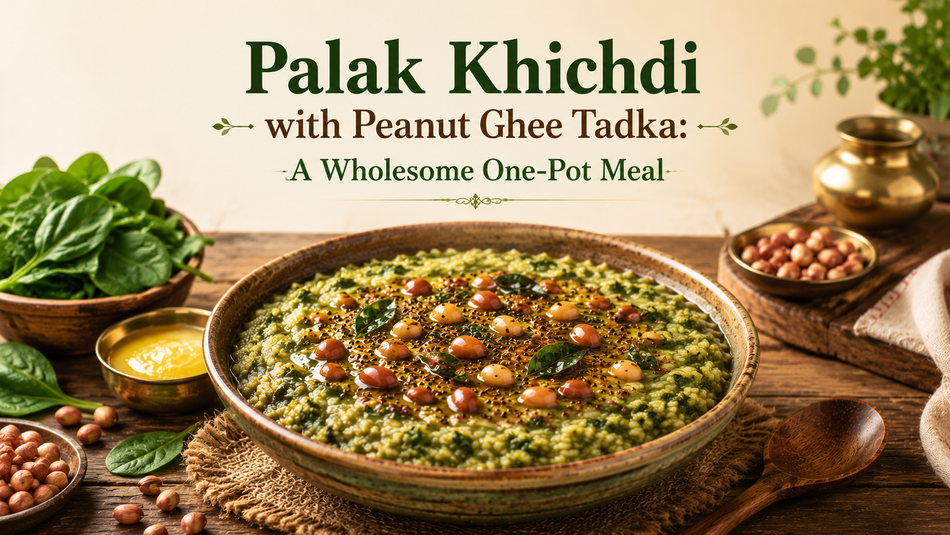
Khichdi is firmly in the second category. It has been a staple of Indian home cooking for a very long time — simple to make, easy to digest, deeply satisfying. And yet, the version most people grew up with, the plain rice and dal khichdi, only tells half the story. Add spinach for colour and nutrition, finish it with a proper ghee tadka made with roasted peanuts and curry leaves, and you have something that is genuinely special without being complicated.
This Palak Khichdi with Peanut Ghee Tadka is exactly that. It is a recipe for real, regular cooking — the kind of meal that earns its place in your weekly rotation. The peanut tadka in pure A2 Bilona Ghee is what makes it. When the peanuts go into hot ghee and start to roast, the aroma changes the entire kitchen.
At Gaurya Farms, we believe the best ghee should perform just as well in an everyday meal as it does in a festive preparation. This recipe is a good example of what that looks like in practice.
Recipe at a Glance
| Detail | Info |
| Preparation Time | 10 minutes |
| Cooking Time | 30–35 minutes |
| Serves | 2 to 3 people |
| Meal Type | Lunch or Dinner — One-Pot Comfort Meal |
| Difficulty | Easy |
| Key Ingredient | Pure A2 Bilona Gir Cow Ghee — used twice, in the khichdi base and the tadka |
Ingredients
For the Palak Khichdi
- ½ cup rice
- ½ cup yellow moong dal — or split green moong
- 2 cups spinach (palak), finely chopped
- 1 small onion, finely chopped — optional, but adds body
- 1 small tomato, chopped
- 1 teaspoon grated ginger
- ½ teaspoon turmeric powder
- ½ teaspoon cumin seeds
- Salt to taste
- 3½ to 4 cups water
- 1 tablespoon Gaurya Farms A2 Bilona Gir Cow Ghee
For the Peanut Ghee Tadka
- 1 tablespoon Gaurya Farms A2 Bilona Gir Cow Ghee
- 2 tablespoons roasted peanuts — or raw peanuts lightly fried
- ½ teaspoon cumin seeds
- 1 to 2 dried red chilies
- A pinch of hing (asafoetida)
- 6 to 8 curry leaves
- A pinch of black pepper or red chili flakes to taste
Note on ghee quantity: This recipe uses ghee at two stages — once while building the khichdi base, and again for the tadka. The tadka is where the ghee is most important. A ghee with adulteration or a weak aroma will not give you the same result in the tadka. Gaurya Farms ghee is independently lab-tested for purity before it is packed and shipped.
How to Make Palak Khichdi with Peanut Tadka
Step 1 — Wash and Prepare
Wash the rice and moong dal together under running water until the water runs clear. Let them soak for 10 minutes if you have time — this helps the khichdi cook more evenly and become softer. Chop the spinach finely. Keep the ginger grated and the onion and tomato ready.
Step 2 — Start the Khichdi Base
Heat one tablespoon of Bilona Ghee in a pressure cooker or a heavy-bottomed pot on medium heat. Add the cumin seeds and let them crackle — this takes about 20 to 30 seconds. Add the grated ginger and stir for another 30 seconds until fragrant.
If you are using onion, add it now and cook until it turns translucent, about 3 minutes. Then add the chopped tomato and turmeric powder. Cook for 2 to 3 minutes until the tomato softens.
Step 3 — Add the Spinach
Add the finely chopped spinach to the pot. Stir it in and cook for 2 to 3 minutes until the spinach wilts and reduces in volume. The colour will deepen to a rich green as it cooks. This is the point where the base starts smelling very good — the ghee, cumin, ginger, and wilting spinach together create the foundation of the dish.
Step 4 — Add Rice, Dal, and Water
Add the washed rice and moong dal into the pot. Mix well so everything is combined. Pour in the water, add salt, and stir once.
Pressure cooker method: Close the lid and pressure cook for 3 whistles on medium heat. Let the pressure release naturally before opening.
Open pot method: Bring to a boil, then reduce to a low simmer. Cover and cook for 25 to 30 minutes, stirring occasionally, until the rice and dal are completely soft. Add more water if needed — a good palak khichdi should be slightly loose, not dry.
Step 5 — Make the Peanut Ghee Tadka
This is the step that defines the recipe. Get it right and the dish is genuinely memorable.
Heat one tablespoon of Bilona Ghee in a small pan on medium heat. Add the cumin seeds and wait for them to crackle. Add the peanuts and keep stirring. The peanuts will start to turn golden — this takes 2 to 3 minutes. Watch them carefully; they go from golden to burnt quickly.
Once the peanuts are golden, add the dried red chilies, hing, and curry leaves. The curry leaves will crackle and release their aroma immediately. Add the black pepper or chili flakes and stir for another 20 to 30 seconds. Remove from heat.
Step 6 — Finish and Serve
Pour the hot peanut tadka over the palak khichdi immediately. Do not stir it in completely — let the tadka sit on top so each serving gets a portion of the ghee, peanuts, and curry leaves.
Serve hot. Add a small teaspoon of warm Bilona Ghee on top of each bowl just before eating. This finishing drizzle is not just for flavour — the warmth of the ghee as it melts into the khichdi is part of the experience.
Why the Ghee Makes the Difference in This Recipe
Khichdi with ghee is not a new idea. What changes the result is the quality of the ghee you use.
A ghee made from the milk of indigenous Gir cows using the traditional bilona method has a depth of aroma that is noticeably different from refined or commercial ghee. This matters most at two points in this recipe.
The first is when you add it to the base. Bilona Ghee has a higher richness that carries the cumin and ginger aromas better as you build the foundation of the khichdi.
The second, and more important, is the tadka. When peanuts go into good Bilona Ghee and start to roast, the result is a nutty, warm, round fragrance that fills the kitchen. This is one of those cooking moments that is hard to describe but immediately recognisable. It is the smell of a meal being made properly.
The bilona method of preparing ghee — where milk is first set into curd, churned to obtain cultured butter, and then slow-cooked — produces a ghee with a traditional character that is well-suited to tadka cooking. Each batch of Gaurya Farms ghee is independently lab-tested for purity before it leaves the farm in Chittorgarh.
Tips for the Best Palak Khichdi
- Do not skip the tadka. The khichdi alone is good. The khichdi with the peanut ghee tadka is what you will want to make again.
- Use fresh spinach. Frozen spinach works in a pinch but fresh palak gives a better colour and a cleaner flavour.
- Yellow moong dal gives a softer, creamier result. Split green moong is slightly heartier. Both work well.
- The consistency should be loose and porridge-like, not dry. Add extra water before closing the pressure cooker if you prefer it softer.
- Add a squeeze of fresh lemon juice just before serving. It lifts the entire dish and balances the richness of the ghee.
- The onion is optional. Without it, the khichdi is lighter and easier to digest. With it, the base is fuller and more savoury.
- Do not skip the finishing drizzle of ghee on each bowl. This small addition makes a visible and tasteable difference.
Simple Variations to Try
- Add a small piece of jaggery when building the base — a traditional addition in some parts of Rajasthan that adds a subtle sweetness.
- Replace peanuts with cashews in the tadka for a richer, slightly more festive version.
- Add finely chopped green chili with the ginger for more heat.
- Use mixed greens — spinach with a handful of methi (fenugreek) leaves adds a slightly bitter note that works very well with the peanut tadka.
- Serve with a side of homemade curd and a small wedge of lemon for a complete meal.
Khichdi and Ghee in Indian Food Tradition
Khichdi is one of the oldest documented foods in Indian cooking. It appears in references across Ayurvedic texts as a preparation that is easy to digest, nourishing, and suitable for all ages. The combination of rice, lentils, and ghee is considered complete from a traditional perspective.
The version most associated with comfort and recovery in Indian homes always includes ghee — sometimes added while cooking, sometimes poured on top, often both. There is a reason a warm bowl of khichdi with a generous spoonful of pure ghee is still the default home remedy for everything from a cold to an upset stomach.
Adding spinach is a more modern adaptation that increases the nutrition and makes the khichdi more of a complete one-pot meal. The peanut tadka in ghee is a regional touch — common in parts of Maharashtra and Rajasthan — that elevates it from plain to properly delicious.
A Simple Meal, Made Properly
Palak Khichdi does not need much to be good. Rice, dal, spinach, a few spices. But the peanut ghee tadka at the end is what turns a simple meal into something you actually look forward to making.
The ghee matters here more than in most recipes because the tadka is where the dish finds its character. Use the real thing — pure, traditionally prepared ghee made from the milk of Gir cows — and the result speaks for itself.