100% Pure Ghee
Made Only From Gir Cow Milk
100% Pure Ghee
Made Only From Gir Cow Milk Every Batch
Independently Lab-Tested for Purity
Every Batch
Independently Lab-Tested for Purity Free
Shipping Available Across India
Free
Shipping Available Across India Crafted Using the
Traditional Bilona Method
Crafted Using the
Traditional Bilona Method
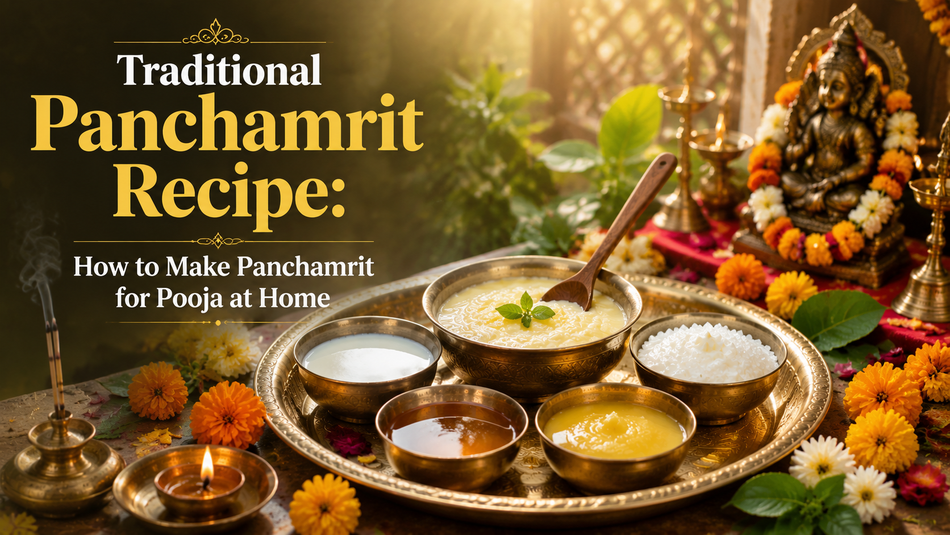
In almost every Hindu pooja, there is one offering that holds a place apart from all others. Panchamrit.
It is not just a mixture. It is a ritual. It is something many Indian families have prepared with care for generations, in homes, in temples, and at family gatherings during festivals. The five ingredients are simple. The intention behind them is deep.
Panchamrit literally means five nectars in Sanskrit. Pancha means five. Amrit means nectar or divine elixir. The five traditional ingredients are cow milk, curd, honey, mishri or rock sugar, and pure cow ghee. Together they are offered to the deity during abhishek, consumed as prasadam, and believed to symbolise purity, nourishment, prosperity, sweetness, and energy.
At Gaurya Farms, we receive messages before festivals from families asking which ghee to use for panchamrit and puja preparations. The answer is always the same: pure, authentic cow ghee made from indigenous Gir cow milk using the traditional bilona method. Not refined ghee. Not mixed ghee. Pure ghee that you can trust.
This recipe guide explains how to make traditional panchamrit at home, which ingredients to use, what each ingredient represents, and why the quality of ghee you choose matters in a devotional preparation like this.
Panchamrit Recipe at a Glance
|
Preparation Time |
5 minutes |
|
Cooking Time |
No cooking required |
|
Serves |
4 to 6 people |
|
Occasion |
Pooja, Abhishek, Festivals, Prasadam |
|
Difficulty |
Very Easy |
|
Key Ingredient |
Pure A2 Bilona Gir Cow Ghee |
Panchamrit Ingredients
The five sacred ingredients of panchamrit have been the same across traditions for centuries. Here is what you need:
-
1 cup fresh cow milk
-
½ cup curd made from cow milk
-
2 tablespoons pure A2 Bilona Gir Cow Ghee - Gaurya Farms ghee is traditionally prepared and purity-tested
-
2 tablespoons honey - raw or natural honey is preferred
-
2 tablespoons mishri, also called rock sugar or crystallised sugar — or use crushed patasha, the small sugar drop candy used in many North Indian puja traditions
Optional additions some families include: a few strands of saffron, a pinch of cardamom powder, or a few tulsi leaves.
A Note on Ingredient Quality
In a devotional preparation like panchamrit, the quality of each ingredient is considered important. Fresh cow milk, properly set curd, natural honey, and pure ghee are the standard. If the ghee has been adulterated or made from mixed milk sources, it does not align with the tradition this offering comes from.
This is one reason families specifically look for Gir Cow Bilona Ghee from a known and trusted source for pooja and havan use.
How to Make Panchamrit Step by Step
Step 1: Choose the Right Vessel
Use a clean vessel made of silver, brass, copper or steel. These materials are traditionally associated with purity and are commonly used in Indian pooja rituals. Avoid plastic containers for a devotional preparation.
Step 2: Add Milk and Curd
Pour the cow milk into the vessel first. Add the curd and stir gently. The mixture will be slightly thick and will have the light sourness of the curd alongside the freshness of the milk.
Step 3: Add the Ghee
Add two tablespoons of pure A2 Bilona Gir Cow Ghee. Stir slowly until it is combined with the milk and curd. You will notice the texture changes slightly, becoming richer. The aroma of the ghee becomes noticeable even in a small quantity.
Using genuine bilona ghee here is meaningful. The slow-churned, wood-fire cooked preparation method gives it a warmth of aroma that sets it apart from factory-made ghee.
Step 4: Add Honey
Add the honey and mix it in gently. Do not overmix or beat the mixture. Panchamrit is traditionally stirred with care, not whisked. The honey brings a natural sweetness and a slight floral note to the offering.
Step 5: Add Mishri or Patasha
Finally, add the mishri or crushed patasha and mix until it begins to dissolve. The mishri adds a clean, crystalline sweetness that balances the sourness of the curd and the richness of the ghee.
Step 6: Offer and Distribute
Your panchamrit is ready. Offer it to the deity during abhishek or pooja. After the rituals, distribute it as prasadam among family members and guests. In many homes, everyone receives a small portion in their palm or in a small spoon.
What Each Ingredient in Panchamrit Represents
Panchamrit is not a random recipe. Each ingredient has a symbolic meaning that has been documented in Indian traditions for a very long time.
|
Milk (Dugdha) |
Purity and nourishment. Cow milk has been considered sacred in Indian culture and is the foundation of the offering. |
|
Curd (Dadhi) |
Prosperity and auspiciousness. Setting milk into curd is a transformation that is seen as symbolically positive. |
|
Ghee (Ghrita) |
Vitality and strength. Pure cow ghee has been associated with energy and life-giving properties in traditional texts. |
|
Honey (Madhu) |
Sweetness and harmony. Honey brings together the other flavours and symbolises the sweetness of devotion. |
|
Mishri or Rock Sugar |
Happiness and clarity. The clean, refined sweetness of mishri is associated with mental clarity and joy. |
When these five ingredients come together, the offering is considered complete. That is why substituting any of them, especially with low-quality versions, is traditionally avoided.
Why the Quality of Ghee Matters in Panchamrit
Of the five ingredients in panchamrit, ghee is often the one where quality varies the most in the market today. Many commercial ghee products are made from the milk of mixed breeds, use the direct cream method rather than the traditional bilona method, and are not transparently sourced.
For a devotional preparation like panchamrit, many families specifically seek out pure A2 cow ghee made from indigenous breeds like Gir cows. The reasons are cultural, traditional, and practical.
-
Indigenous Gir cows produce A2 milk, which is the variety traditionally used in Indian rituals and cooking.
-
The bilona method, where curd is churned to obtain cultured butter before slow-cooking into ghee, is the preparation style referenced in traditional Indian practices.
-
Purity matters in a devotional offering. Adulterated ghee or ghee of unknown origin is not what families want in their pooja preparations.
Gaurya Farms prepares A2 Bilona Gir Cow Ghee using the traditional bilona method from the milk of indigenous Gir cows at its farm in Chittorgarh, Rajasthan. Each batch is independently lab-tested for purity.
For families who want to know exactly what goes into their pooja ghee, the lab reports are available to view openly on the website.
When Is Panchamrit Made? Festivals and Occasions
Panchamrit is not limited to one festival or one ritual. It is prepared across many occasions in Indian households and temples throughout the year.
-
Janmashtami — offering to Lord Krishna, where panchamrit abhishek is a central ritual
-
Mahashivratri — abhishek of the Shivalinga with panchamrit is a long-established tradition
-
Ram Navami and other Vaishnav festivals
-
Griha pravesh and home ceremonies
-
Satyanarayan Katha puja
-
Navratri and Devi puja
-
Daily pooja in homes that follow regular abhishek rituals
In temples, panchamrit is often made in large quantities. In homes, small batches are prepared fresh for each occasion. The recipe scales easily depending on how many people will be receiving prasadam.
Tips for Making Perfect Panchamrit
-
Always use fresh ingredients. Stale curd or old ghee changes the aroma and character of the offering.
-
Do not heat the mixture. Panchamrit is offered and consumed at room temperature.
-
If mishri is not available, small crushed patasha work well. Powdered sugar is a last resort and not the traditional choice.
-
Use a clean vessel that is reserved for pooja use where possible.
-
Prepare panchamrit fresh on the day of the ritual. It is not meant to be stored.
-
The quantity of each ingredient can be adjusted based on the number of people and the size of the ritual. The ratio of milk to curd is typically 2:1.
A Final Thought
There is something quietly meaningful about preparing panchamrit at home before a pooja. The act of choosing each ingredient carefully, mixing them by hand, offering them to the deity, and then sharing the prasadam with family is one of the older rituals of Indian home life.
At Gaurya Farms, we prepare ghee the way it was always meant to be prepared — from the milk of indigenous Gir cows, through the traditional bilona method, in small batches, with each batch tested for purity before it reaches you. It is the kind of ghee you can use with confidence in a devotional preparation.
If you have any questions about which ghee to use for pooja, havan, or daily cooking, you are welcome to reach out to us at gauryafarms.com.